Bless Our Nest: A Designer’s Review for Embroidery Projects
As a designer who has spent countless hours hooping fabric and troubleshooting tension issues, I approach every new machine embroidery design with a mix of curiosity and caution. We have all been there: downloading a file that looks perfect on screen but turns into a tangled mess of thread breaks and puckering on the machine. Today, I am taking a close look at Bless Our Nest, a design that has caught my eye among the available Freebies and digital assets. This is not just about aesthetics; it is about determining whether this graphic holds up under the needle in real-world applications.
First Impressions and Visual Personality
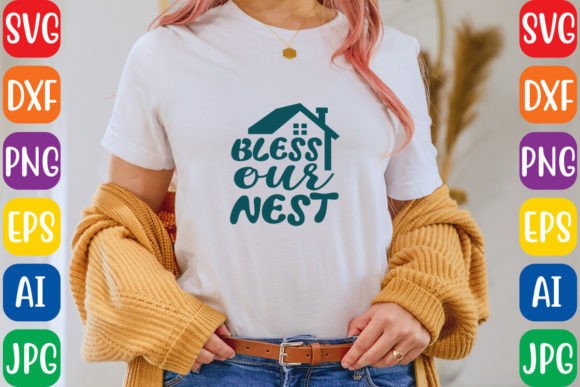
The phrase "Bless Our Nest" carries an immediate warmth. It evokes feelings of home, sanctuary, and family. Visually, the design relies on clean lines and balanced typography, which is crucial for embroidery. When I first opened the source files, I was looking for clarity. The layout suggests a modern farmhouse or cozy cottage aesthetic, which remains incredibly popular in the handmade market. For an embroidery project, this mood is vital because it dictates where the final product will live. This is not a design for high-energy sportswear; it belongs in the living room, the nursery, or the kitchen.
The visual personality here is inviting without being overly cluttered. In embroidery, less is often more. Complex backgrounds can lead to excessive stitch counts and fabric distortion. Bless Our Nest appears to prioritize readability and shape integrity, which are the two pillars of a successful stitched piece. As a reviewer, I appreciate designs that understand their medium. This graphic seems to respect the limitations of thread and fabric, aiming for impact through simplicity rather than density.
Real-World Application: The Tote Bag Test
To truly evaluate a design, you must imagine it stitched out. Let us consider a practical scenario: a custom canvas tote bag design. Canvas is a sturdy fabric, but it can be unforgiving if the stitch density is too high. If I were producing this for a small shop product or an Etsy listing, I would want the text to be legible from a few feet away. The structure of Bless Our Nest suggests it would perform well here. The letters likely have enough weight to stand out against the textured weave of the canvas.
Beyond tote bags, think about sweatshirt embroidery. A crewneck sweatshirt in a neutral tone like oatmeal or sage green would provide the perfect backdrop. The design would sit centrally on the chest, acting as a subtle statement piece. For custom apparel, the key is comfort. If the design is too dense, it becomes stiff and uncomfortable against the skin. Based on the open nature of the typography usually associated with this phrase, I suspect it allows the fabric to breathe, making it suitable for wearable items.
Versatility Across Product Lines
This design is not limited to apparel. Consider its potential as an embroidered patch. Patches are trending heavily in boutique branding and personalization. A circular or oval hoop containing this phrase could be ironed onto denim jackets or backpacks. It also translates beautifully to home decor. Imagine this stitched onto a linen pillow cover or a set of kitchen tea towels. For holiday embroidery gifts, such as housewarming presents or wedding favors, this message hits the right emotional note. It is generic enough to appeal to many but specific enough to feel personal.
For those running a craft business, versatility is money. A single design that works on a baby onesie, a apron, and a wall hanging maximizes your return on investment. Bless Our Nest fits into the category of evergreen designs. It does not rely on fleeting trends, meaning your inventory of finished products will remain relevant season after season.
Technical Considerations and Stitching Advice
Now, let us get into the technical weeds. The product description notes that you receive SVG files and an Adobe Illustrator AI file. This is important. SVGs are vector-based, which means they scale infinitely without losing quality. However, an SVG is not an embroidery file. You cannot plug an SVG directly into most embroidery machines. You need digitizing software to convert these vectors into stitch data, or you must ensure the provider has included actual embroidery formats if stated elsewhere. Since the description specifies "SVG FILES" and "Ai File," I must assume this is a graphic asset intended for those who digitize their own work or use it for print-on-demand services alongside embroidery.
If you are digitizing this yourself from the AI file, pay close attention to stitch density. For the text, a satin stitch might look elegant, but if the letters are wide, you will need split stitches or fill stitches to prevent long floats that catch on things. For smaller details, consider using a running stitch outline to keep the profile low. Always test the design on scrap fabric first. Check how the thread colors contrast with your background. A dark thread on dark fabric will vanish, ruining the effect.
Be cautious with small hoop sizes. If you attempt to shrink this design too much for a tiny monogram hoop, the letters may merge, and the legibility will suffer. Confirm the minimum viable size before committing to a production run. Also, consider the fabric texture. On fluffy towels or fuzzy fleece, fine details can get lost. In those cases, increasing the stitch count slightly or using a contrasting underlay can help the design pop.
Navigating Fabric and Stabilizer Choices
The success of any handmade product relies heavily on stabilization. For stretchy fabrics like t-shirts or baby clothes, a cut-away stabilizer is non-negotiable to prevent distortion after washing. For woven fabrics like aprons or tote bags, a tear-away might suffice, but I always recommend testing. If you are stitching on dark fabric, ensure your thread colors are vibrant enough to stand out. Pastel threads on navy blue can look muddy if not carefully selected.
Another critical point is licensing. Since this is listed under Graphics and Freebies, you must verify the license terms before selling finished items. Some free designs are for personal use only, while others allow commercial use of the physical embroidered item but not the digital file itself. Never assume. Check the documentation included in the zip file. Protecting your Etsy seller account and your reputation requires strict adherence to these rules.
Final Verdict for Designers and Makers
Bless Our Nest offers a solid foundation for a variety of creative projects. Its strength lies in its emotional resonance and clean visual structure. For the experienced designer, it provides a flexible asset that can be adapted for commercial embroidery or personal gifts. For the hobbyist, it is an accessible entry point into creating meaningful home decor.
Remember, the file format provided is primarily for design and illustration purposes. If you are not a digitizer, you will need to convert these graphics into a machine-readable format using appropriate software. Take the time to create a proper printable mockup or digital preview to show customers what the final stitched product will look like. This builds trust and enhances buyer engagement.
In the end, a design is only as good as its execution. Test your tension, choose your stabilizer wisely, and stitch with care. If you do, Bless Our Nest can become a staple in your portfolio, bringing warmth and professionalism to your small shop product lineup. Happy stitching.